
WILLIAM
RICHARD MARSTERS
aka RICHARD MASTERS (b.1831, d.1899)
From Walcote,
Leicestershire, England
to Palmerston Island, Cook Islands
Map of Palmerston Island drawn by Liam Hilyard, great (x4)-grandson of William Richard Marsters

NEW
Click here to read pages from this book about William Marsters
Click here to read pages from this book about his English family in "Masters of Walcote"
Mama's Story
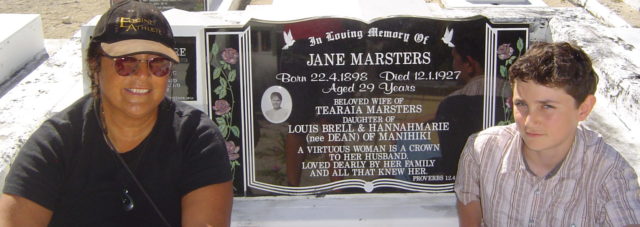
To read a story written by Kirsten Hilyard. She interviewed her grand-mother about her life on Palmerston following a big hurricane which destroyed their island. Jane Marsters was only a ten year old at the time, but her story describes how the islanders survived for what she believes was several months before a ship visited to bring essential supplies.
WILLIAM RICHARD MARSTERS
Born
Richard Masters,
Walcote, Leicestershire, ENGLAND
(6 November 1831)
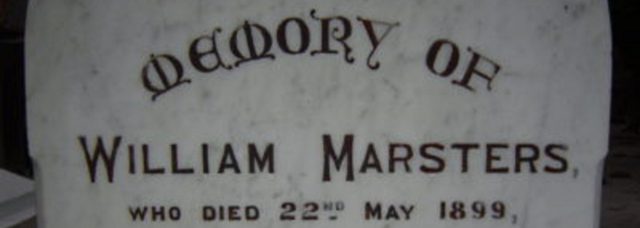
Died William Marsters, Palmerston Island, COOK
ISLANDS
(22nd May 1899)
For many years the origins of William Richard Marsters were relatively unknown. He had passed on snippets of his former life to his family and friends yet it appeared that he told different versions depending on whom he was telling.
He originally left England after a disagreement with his family and it is told that he came to the South Pacific via the goldfields of California, then to Hawaii before arriving on Penrhyn in the Cook Islands around about 1865. Despite already having a daughter to Penrhyn woman Arehata, he married a Penrhyn chief's daughter Akakaingaro. Perhaps he found her name difficult to pronounce (although it was said that he was an interpreter on several occasions on the boats) but he called his wife Sarah. "Masters of Walcote, Leicestershire" provides a reason for this name.
Marsters worked on trading vessels travelling around the Cook Islands and other islands of the South Pacific and it is told he also travelled to Australia. On several of these voyages it is know that he took his wife and two young daughters with him. During one of these travels he dropped his wife off in Samoa. Tragedy struck when his elder daughter, Ann, died by drowning. The family suffered the loss of their second daughter, Elizabeth, on the island of Manuae of unknown causes. Marsters had been left in charge of a group of workers who were planting copra trees on the island for his trader employer, Brander. It is understood that the group were not in good health when they were finally picked up and eventually taken to Palmerston. Accompanying the family at the time was Sarah's cousin, Tepou who had been brought to the island to help the young mother with her two sons Joel and William who was born just before they landed on the island.
Life was difficult for the family, but William demonstrated remarkable leadership on the island, organising buildings to cater for the family and the workers who had been brought in to do the planting. The buildings were firmly constructed to cater for the storms that frequently lashed the area. Sharing of chores and regular routines for the inhabitants of the island meant that when Brander finally returned to pick up his goods, Marsters had created a little village in which the inhabitants, mainly his own family, were firmly established. Brander claimed that the island was his to discharge as he wanted. Marsters disagreed and refused to remove himself or his family.
This established a feud that lasted even after Brander had died. His wife and new husband returned in an attempt to make a takeover bid. Masters won a case to remain on the island, and after several years of building up a strong community and culture on the island, was able to establish legitimate ownership of the island for his family.
Of more memorable note concerning any story about William Marsters is how the communal living conditions leant itself to his extra-marital relationships which according to one research informant, were quietly condoned by his wife Sarah. She was apparently not unhappy about sharing her husband's affections with her cousin, and later also with the wife of a fellow trader Jean Fernandez who had left her behind in his friend's safe keeping while he worked on the local whaling ships. As his friend was a dark Portugese it was quite obvious when he returned and saw his wife's children and their fair skin that they were not his. It didn't seem to affect his relationship with his drinking buddy too greatly. Fernandez later died in an accident on Rarotonga.
"Stories of Palmerston" tells about what is known about William Marsters from the time he arrived around in the Pacific about 1856 until he died in May 1899. He was survived by his three wives on Palmerston and 23 children many of whom were still living on Palmerston Island. During his lifetime he established rules and regulations on the island which for many years enabled the three families to live harmoniously, each with their own designated areas on the main islet, and on the smaller sandy islets around the lagoon. The fish from this lagoon and the coconut crops on the islets around it provided the basis of their diet. William left a legacy for his descendants. It lies in the land which he worked hard to establish for future generations.
Family members moved away from the island as population growth created difficulties for sustainability and inevitably between the three families. Young couples were attracted by the opportunities to establish life elsewhere in New Zealand and Australia. Some have never returned. Their children and their children's children may never get to see Palmerston Island and access to the little atoll is not easy. There are no flights to the island, and boat transport is infrequent. Yet, for many people who claim a relationship to the Marsters family, there will always be a connection to the island and especially to William Marsters, the man who made it all happen.